
Water Monitoring for Spanish Private Communities: The IoT Reseller's Complete Guide
If you install IoT hardware or sell LoRaWAN solutions in Spain, smart water monitoring for comunidades de vecinos is your highest-margin recurring service. This guide covers hardware, white-label portal setup, and — critically — how to justify the ROI to a sceptical community president.
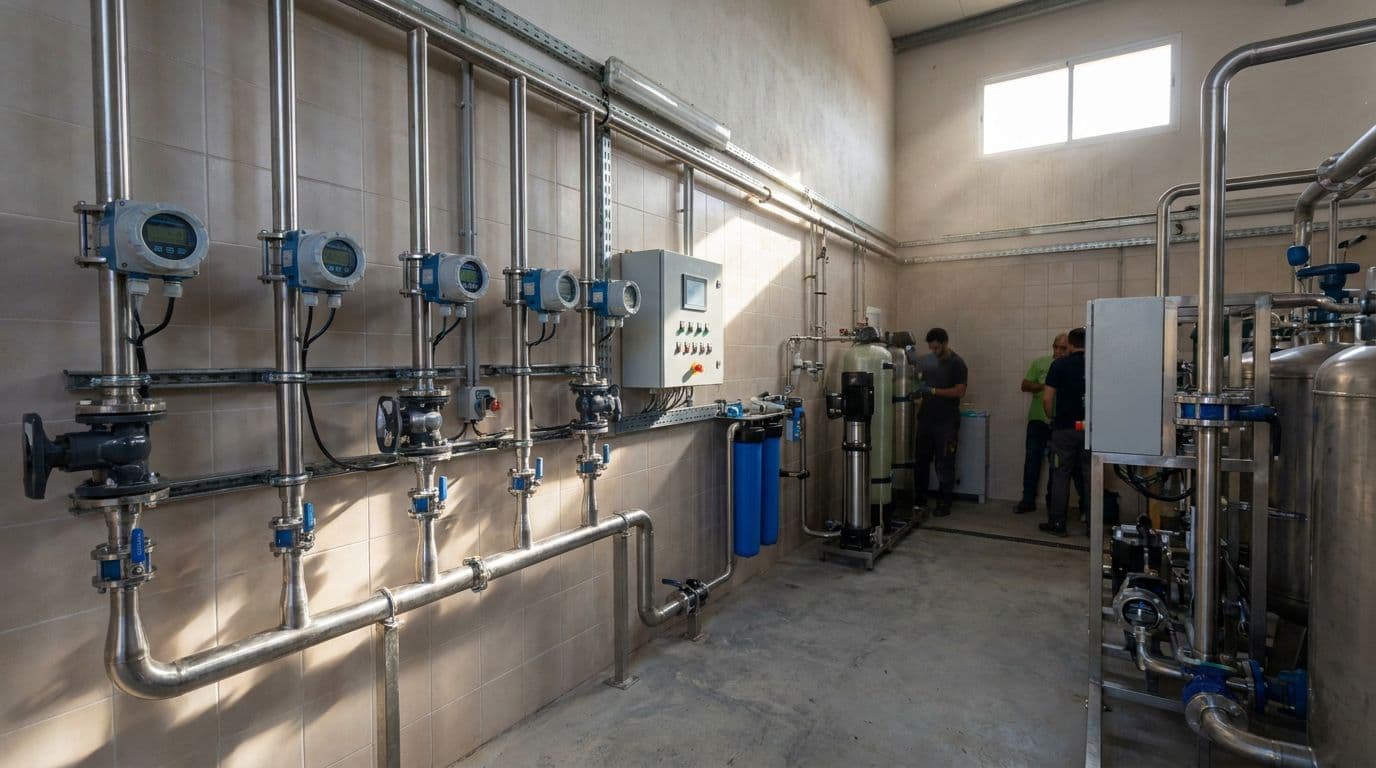
If you already install IoT hardware or sell LoRaWAN solutions in Spain, adding smart water monitoring for comunidades de vecinos is the most natural extension of your existing business. You know the hardware, the connectivity, and the installation process. What most IoT resellers still lack is two things: a software layer that turns raw meter data into a service a community manager will actually pay for month after month, and a clear economic argument to put in front of the presidente de la comunidad who controls the budget.
This guide covers both. You will find a concrete ROI calculation structured for a non-technical sales conversation, a step-by-step service setup guide, a technology comparison that helps you choose the right connectivity for each site, and a walkthrough of the white-label portal tools that let you deliver a professional product without building software.
Why Spanish Private Communities Are Ready to Buy Now
The water problem is forcing action
Spain is one of the most water-stressed countries in continental Europe, with renewable water supply falling short of demand across large parts of the south and east. In comunidades de propietarios — the legal structure governing the vast majority of Spanish private residential developments under the Ley de Propiedad Horizontal — water is typically the single largest shared operating cost. Communal gardens, pools, irrigation systems, and aging building infrastructure routinely drive bills of thousands of euros per year.
The structural problem is that most communities still manage water through quarterly bill reviews. By the time an undetected leak appears on an invoice, it has often been running for sixty to ninety days.
A pipe fault running at 8 cubic metres per day — a realistic figure for a joint failure in an irrigation system or communal supply line — wastes 720 cubic metres over a 90-day billing cycle. At a typical Spanish urban water tariff of €1.60 per cubic metre, that is over €1,150 in avoidable cost, arriving as a surprise on the next quarterly bill.
This is the number that opens the door with a community president.
The decision-makers are under pressure
Administradores de fincas — the professional managers who handle the day-to-day administration of comunidades de propietarios — are under pressure from both residents and regulation. Spain's Directiva Marco del Agua transposition has pushed metered accountability progressively onto larger consumers, and community managers are now expected to demonstrate responsible resource management at annual owner meetings.
More practically: when a resident calls the administrador to complain about a high water bill, the manager has no answer without consumption data. Your service gives them that answer — and makes you the trusted technical partner they recommend to every other community they manage.
The Business Case: What to Tell the Community President
This is the section most IoT resellers skip — and the reason sales stall at the second meeting.
The presidente de la comunidad is typically a resident volunteer with no technical background. Their objection is not about LoRaWAN or webhook ingestion. It is simple: "We already pay a plumber to check things once a quarter. Why should we pay extra every month for sensors?"
Here is the economic answer, structured for a non-technical conversation.
Sample ROI calculation: medium urbanisation, 40 homes
The monthly fee a community pays has two layers: the white-label platform cost and the reseller's own service margin. DataKubo charges resellers €0.50 per device per month — a fixed base that covers the portal, automated alerts, REST API, and GDPR tooling. On top of that, each installer sets their own price to reflect installation support, ongoing maintenance, and monthly reporting. In this example the reseller charges the community €2 per device per month — a common starting point that keeps the community's investment modest while delivering a healthy margin on every account.
| Without monitoring | With monitoring | |
|---|---|---|
| Monitored devices | — | 40 meters |
| Platform cost to reseller (DataKubo) | — | 40 × €0.50 = €20/month |
| Monthly fee charged to community (reseller price) | €0 | 40 × €2 = €80/month (€960/year) |
| Leak detection time | 60–90 days (quarterly bill) | 24–48 hours (automated alert) |
| Undetected medium leak cost (8 m³/day × 75 days) | 600 m³ = €960 wasted | 8 m³ = €13 wasted |
| Avoided losses from 3 typical incidents/year | €0 | ~€2,800 |
| Net annual position | −€2,800 in undetected losses | +€1,840 net saving |
The core message for the sales conversation: a single medium leak detected within 48 hours instead of 90 days saves the equivalent of virtually the entire annual monitoring fee. Communities with pools, large irrigation systems, or ageing internal plumbing — where faults are most common — typically recoup the full annual cost within the first detected incident, and three incidents in a year deliver nearly €1,840 in net savings.
Supporting arguments that close the objection
Beyond the direct leak savings, three points typically seal the conversation:
Consumption awareness reduces waste by 10–15%. When daily data is visible on a report, gardening contractors, cleaning services, and residents adjust behaviour. This saving is independent of any leak detection.
Documented monitoring demonstrates due diligence. If a water damage insurance claim is made against the community, evidence of active monitoring strengthens the community's position considerably.
The annual meeting becomes proactive. Instead of explaining a surprise bill, the administrador can show a consumption trend chart and demonstrate that a detected anomaly in March saved the community €900. This is the kind of result residents vote to renew.
Why LoRaWAN — and How It Compares to the Alternatives
If you already work with LoRaWAN, this section gives you the comparison table you need when a community manager or competing installer asks why you chose it. If you are evaluating options, it helps you match technology to site requirements.
| LoRaWAN | NB-IoT | Zigbee / Z-Wave | |
|---|---|---|---|
| Urban coverage | Up to 5–10 km, penetrates concrete | Nationwide via mobile carrier | 10–100 m, mesh-dependent |
| Battery life | 5–10 years | 3–7 years | 1–3 years |
| Recurring cost per device | None (own gateway) | €1–3/device/month SIM | None |
| Thick concrete wall penetration | Excellent | Good | Poor |
| Gateway investment | €100–400 one-time | Not required | €50–200 |
| Multi-building coverage | One gateway, typically | Per-device connection | Multiple hops required |
| Best fit | Multi-building urbanisations | Dispersed rural sites | Single small building |
LoRaWAN is the right choice for the Spanish private community market. Spanish urbanisations are typically multi-building developments with thick concrete construction and distributed irrigation infrastructure. A single indoor LoRaWAN gateway installed in a communal technical room covers the entire development. No SIM costs, no monthly carrier fees, and battery life measured in years rather than months.
NB-IoT is the correct alternative for isolated rural wells or water points where running power to a gateway is impractical. Zigbee and Z-Wave are unsuitable for anything larger than a single compact apartment block.
LoRaWAN is a low-power wide-area network protocol designed to transmit small data packets over long distances using minimal energy, making it ideal for battery-powered water meters installed in basements, irrigation enclosures, and building shafts where Wi-Fi or cellular signals are unreliable.
Your Role in the Service: Two Paths
Not every installer wants to operate the service layer. Before deciding whether to build and manage your own monitoring service, it is worth clarifying what role you want to play.
Build and manage your own service. Use a white-label platform to brand and deliver monitoring directly to communities under your name. You own the client relationship, set your own pricing, and collect recurring monthly revenue. This is the path the rest of this guide covers.
Focus on installation and refer the service to a specialist. If you prefer to earn from hardware installation without taking on platform management, alert monitoring, and monthly reporting, Aqualinks offers a managed water monitoring service designed for the Spanish private community market. You install the hardware; Aqualinks runs the service. Your clients receive a professional solution and you stay focused on what you do best.
Both models work. The decision comes down to whether you want to build a recurring service business or stay in the project-based installation world.
How to Structure Your Water Monitoring Service
Step 1: Define your offer for the private community segment
The private community market has two distinct sub-segments with different sale dynamics:
Urbanisations with communal infrastructure (shared gardens, pool, irrigation, common supply meter): these are your easiest first sale. Communal water is a shared cost that affects every owner, the administrador already has budget responsibility for it, and a single leak detection event creates an obvious measurable win.
Blocks of flats with individual apartment meters: higher device count but the sale is more complex because consumption is per-owner, not communal. Start with urbanisations and use them as your reference installations.
Decide early on your pricing model. A monthly recurring fee per device — covering the platform, alerts, and monthly report — is cleaner than project-based billing. It creates predictable revenue for you and a predictable line item for the community's operating budget.
Step 2: Source and install LoRaWAN-compatible water meters
Source pulse-output water meters or ultrasonic flow sensors with documented LoRaWAN payloads from established manufacturers. Ensure the devices carry the relevant certifications for use in Spain (CE marking, MID certification for fiscal metering if required).
Physical installation requires a licensed plumber for any work on the water supply. Plan gateway placement before installation day — a site survey to confirm signal coverage avoids repeat visits. In most Spanish urbanisations, one indoor gateway in the technical room or administrator's office covers the entire property.
Step 3: Connect to a white-label portal to deliver data to your customers
A white-label IoT portal is a ready-made software platform that an IoT reseller brands as their own product and delivers to customers without writing any application code. This is where most new entrants underestimate the complexity. Building a custom dashboard — with multi-tenant access, alert rules, consumption charting, and custom domains — takes months and significant development budget.
DataKubo's water meter monitoring platform offers a template designed for exactly this use case: pre-configured consumption charts, leak alert rules, device status monitoring, and multi-tenant management. You brand it with your logo and domain, and it looks like your own product to every community manager who logs in.
Webhook ingestion is the process of receiving sensor data from a LoRaWAN network server by configuring that server to push HTTP payloads to a URL whenever a device transmits. DataKubo accepts webhooks from ChirpStack and The Things Network natively, with automatic payload normalisation — you do not need to write a decoder. Devices register automatically on first transmission.
Step 4: Onboard your first communities and refine your offer
Treat your first two or three communities as paid pilots. Use them to calibrate your alert thresholds, test your reporting cadence, and learn what questions the administrador gets asked at owner meetings. The questions residents ask most often are the ones your monthly report should answer by default.
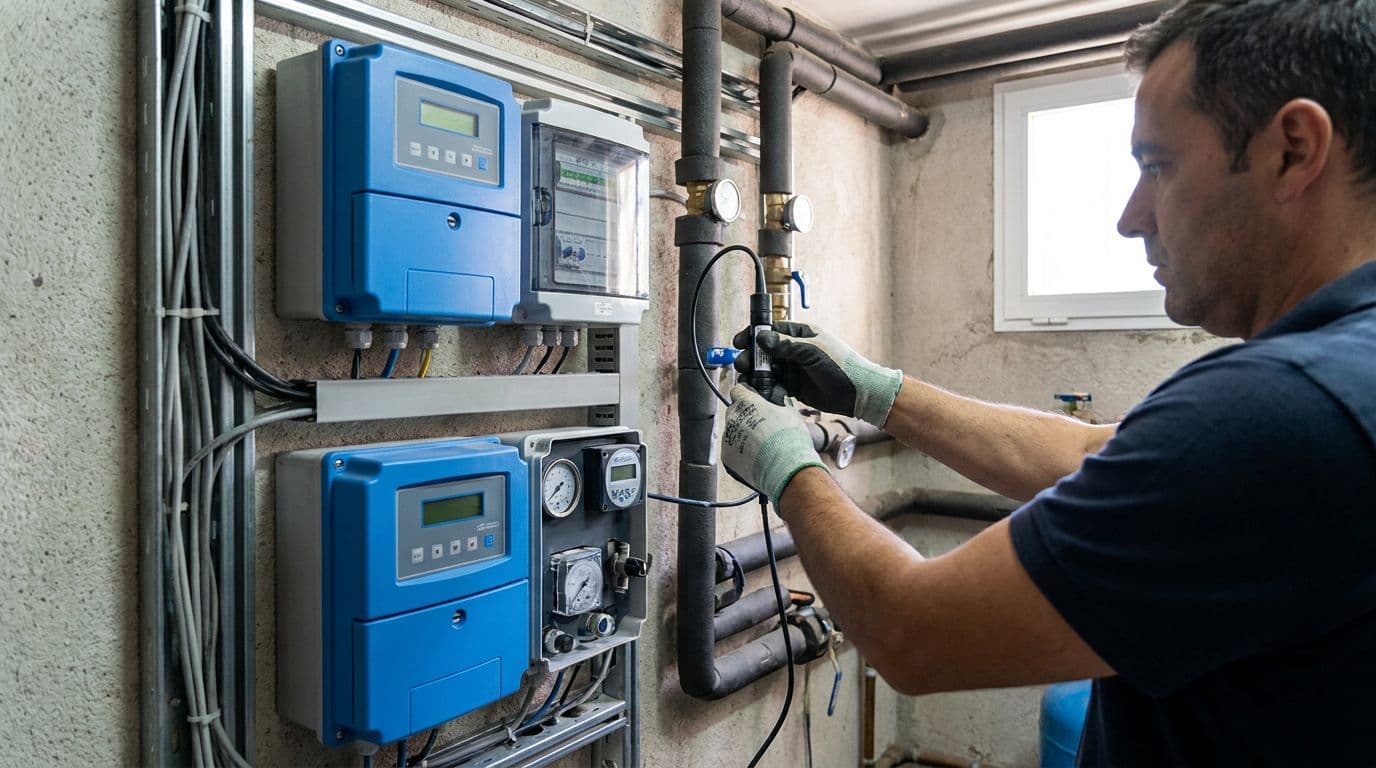
Key Features Your Water Monitoring Service Must Deliver
Real-time consumption charts
Community managers need data they can understand and act on, not raw sensor readings. Your portal should show daily and monthly consumption trends, compare usage across zones or buildings, and surface unusual patterns clearly. DataKubo's consumption dashboard is designed for non-technical users: the administrador logs in and sees immediately whether consumption is normal or elevated.
Automated anomaly detection and leak alerts
Anomaly detection in water monitoring is the automated process of comparing real-time consumption against configurable thresholds and generating alerts when readings suggest a leak, burst pipe, or running tap. This is the feature that converts your service from a reporting tool into a protective system — and the one community managers mention first when recommending you to other administradores.
DataKubo allows you to configure alert rules per device: absolute threshold triggers, overnight-flow alerts (which catch continuously running taps in unoccupied common areas), and device offline notifications for low battery or connectivity loss.
Multi-tenant management for your entire portfolio
Multi-tenant IoT management is the ability to administer multiple independent customer accounts — each with their own devices, users, and data — from a single administrative interface. As you grow from five to fifty communities, this is the operational capability that keeps your business manageable without adding headcount. DataKubo's admin panel lets you switch between community clients, monitor device health across your entire portfolio, and spot a problematic site before your client calls you about it.
Custom domain and branding
Your customers access their portal through a domain that reflects your business. This matters more than most resellers expect: a branded portal reinforces that your company is the expert and the product, not an anonymous SaaS tool. Combined with monthly PDF reports in your branding, it creates the professional presentation that wins contract renewals.
Handling the Data Privacy Objection
The community president or administrador will often ask: "What happens to our consumption data? Who can see it?" Frame your answer as a demonstration of professionalism, not a legal disclaimer.
Water consumption data linked to individual meters can constitute personal data under GDPR, particularly in residential buildings where individual apartments are metered. As the service provider, you act as a data processor on behalf of the community (the data controller). Before processing any data, you must have a signed Data Processing Agreement (DPA) in place with each community client.
Your DPA should define: the categories of data collected (timestamped consumption readings per meter), the purpose (anomaly detection and billing transparency), the retention period, and the process for deletion on contract termination.
DataKubo operates under a clear privacy policy and provides a Data Processing Agreement template for resellers. Having this document ready before your first client meeting signals competence and removes the objection before it becomes a blocker. It also protects you: a DPA is not optional under GDPR.
Scaling Across More Communities
Multi-tenant growth management
Adding a new community should take minutes, not a day of configuration. DataKubo's admin panel lets you create a new customer account, configure devices and alert rules, and invite the community manager to log in with their own credentials — each client seeing only their own data. This model scales to fifty, a hundred, or more communities without requiring additional staff for client management.
Is a white-label platform the right long-term foundation?
For IoT resellers focused on a specific vertical like water monitoring in private communities, the answer is yes for the first three to five years at minimum. Building a platform with equivalent features — multi-tenancy, alert rules, consumption charting, API, custom domains, GDPR tooling — would take a skilled development team twelve to eighteen months and cost six figures. A white-label LoRaWAN platform lets you direct your capital towards customer acquisition and installation capacity instead.
Frequently Asked Questions
How much does a water monitoring system cost for a Spanish private community?
Total cost has two components: hardware and the monthly service fee. Hardware — LoRaWAN water meters plus a gateway — typically runs €80–150 per meter installed, plus €150–400 for the gateway. On the service side, pricing has two layers: DataKubo charges the reseller €0.50 per device per month for the platform, alerts, and API. The reseller adds their own service margin on top — for installation support, maintenance, and reporting — and sets the final price to the community. A community with 40 metering points and a reseller price of €2 per device would pay €80 per month (€960 per year).
How quickly does the investment pay back for the community?
For communities with any communal water infrastructure — irrigation, pool fill, shared supply — payback typically occurs in the first year. A single medium leak (8 m³/day) running undetected for 90 days costs over €1,000 at standard Spanish water tariffs. Detecting the same leak within 48 hours limits the loss to under €25. Three such events in a year more than cover the annual monitoring cost.
Do I need a community meeting resolution to install water sensors?
Under the Ley de Propiedad Horizontal, works that modify communal installations typically require a majority vote at the junta de propietarios. However, non-invasive monitoring that attaches to existing meters without plumbing modification is often treated as a maintenance service contract rather than an installation work, which requires only the approval of the president and administrator. Confirm with a Spanish legal adviser for your specific installation type.
Can I monitor existing analogue meters without replacing them?
Yes, in most cases. Pulse-output adapters can be retrofitted to standard meters to add LoRaWAN connectivity, and ultrasonic clamp-on sensors work for larger pipes where replacement is impractical.
That said, replacing existing meters with natively connected smart meters is the recommended approach whenever feasible. Native units eliminate the adapter as a failure point, deliver more reliable data, and typically offer longer battery life. Replacement is especially worthwhile when meters are approaching their mandatory recalibration cycle under Spanish metrology regulation (every 6 years for class B meters under Real Decreto 244/2016), since the marginal cost of upgrading at that point is minimal.
What is the difference between LoRaWAN and NB-IoT for water monitoring?
LoRaWAN uses your own gateway and requires no carrier contract, making it more cost-effective for urbanisations where you can install a gateway in a technical room. NB-IoT uses the mobile network and is better suited to dispersed rural installations where gateway placement is impractical. For the private community market in Spain, LoRaWAN is almost always the right choice.
What happens if a sensor stops transmitting?
A properly configured monitoring platform generates an "offline" alert when a device misses its expected transmission window. DataKubo sends these alerts automatically. Most LoRaWAN water meters transmit every 12 hours by default, though this can be adjusted to match the use case; a missed transmission triggers an alert within the next expected window. This means sensor failures are caught proactively — before a community manager notices a gap in their data.
How do I handle GDPR when monitoring communal and individual meters?
Communal supply meters — measuring total building consumption — present minimal GDPR complexity because the data is not linked to an individual. Individual apartment meters require a GDPR-compliant data processing agreement between your company and the community. DataKubo provides a DPA template. The community should inform residents that metering data is processed for the purpose of leak detection and billing transparency — typically handled via a clause in the community's internal regulations.
How many communities can one person manage from a single platform?
In practice, a single operator can manage twenty to forty communities from DataKubo's admin panel without dedicated staff for client management. The platform sends alerts automatically; your role shifts from active monitoring to responding to anomalies and delivering monthly reports. Automated API-based onboarding removes the manual bottleneck when adding new clients.
Conclusion
For an IoT reseller already working with LoRaWAN hardware in Spain, smart water monitoring for comunidades de vecinos is the clearest path to recurring monthly revenue. The hardware is proven and familiar. The connectivity infrastructure is often already in place. The missing element is a software layer that makes the service look professional to a non-technical buyer — and a sales argument that turns a budget-conscious presidente de la comunidad from a sceptic into a signed contract.
The economic case is straightforward once you frame it correctly: one detected medium leak pays for virtually the entire annual monitoring cost. Communities with pools, irrigation systems, or ageing infrastructure — the majority of Spanish urbanisations — face this scenario regularly.
Start with two or three communities, build your installation checklist, and calibrate your alert rules. Use a white-label platform like DataKubo to deliver a branded, professional portal from day one. Then use the REST API and multi-tenant management to scale without adding operational complexity.
The administrador de fincas who becomes your first reference client will introduce you to their entire portfolio. That is how this market scales.